Guide
Skin Tag Removal Australia: OTC Options, Safety & When to See a GP
Your guide to skin tag removal in Australia — how OTC freeze kits, ligation bands and creams may help, what is unsafe to do at home, costs, and red flags.
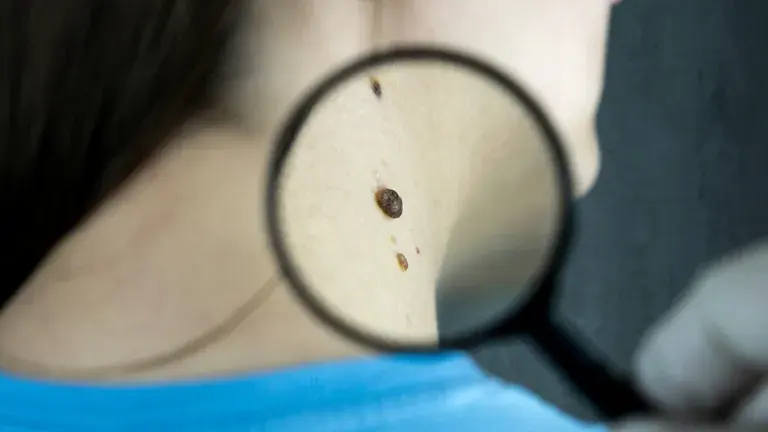
Key takeaways
- For small, confirmed skin tags on the body, Australian pharmacies stock OTC freeze (cryotherapy) kits and ligation band kits that may help remove them over a few days to a couple of weeks. Never cut, tie or burn a skin tag off yourself, and never self-treat anything on the face, eyelids or genitals — or any lump you are not certain is a skin tag. See a GP for assessment if a growth bleeds, changes colour, grows quickly or has an irregular border.
Skin tags are one of the most common skin complaints Australians ask their pharmacist about — harmless little flaps of skin that catch on jewellery, collars and razors. They are not dangerous, but they can be annoying, and plenty of people would rather be rid of them. This guide explains what over-the-counter (OTC) skin tag removal options are realistically available in Australia, how each one may work, what is genuinely unsafe to attempt at home, and when a skin tag is something you should have a GP look at instead.
What OTC skin tag removal options are available in Australia? Australian pharmacies stock two main OTC categories: cryotherapy freeze kits (such as Scholl Freeze Away and Medi Freeze, typically around $30–$40) and ligation band kits (such as TagBand) that cut off the blood supply over roughly 7–14 days. Both may help with small, confirmed skin tags on the body. Neither is suitable for the face, eyelids or genitals, and a GP should assess anything you are not sure is a skin tag before you treat it.
What Are Skin Tags (Acrochordons)?
A skin tag — known medically as an acrochordon — is a small, soft, harmless growth of skin that hangs off the surface, usually attached by a thin stalk. They are typically skin-coloured or slightly darker, painless, and range from a pinhead up to about the size of a grain of rice (occasionally larger). Skin tags are extremely common, and most adults develop at least one over their lifetime.
They tend to appear where skin rubs against skin or clothing — the neck, armpits, eyelids, groin, and under the breasts are the usual spots. Skin tags are made up of loose collagen fibres and blood vessels wrapped in skin, which is why they are soft and why the stalk can bleed if it is torn.
Why Do Skin Tags Form?
The exact cause is not fully understood, but friction is the common thread, which is why they cluster in skin folds. Factors associated with developing more skin tags include:
- Friction from skin rubbing against skin or clothing — the leading factor, hence their location in folds and creases.
- Age — skin tags become more common from middle age onwards.
- Being overweight, which increases the amount of skin-on-skin contact.
- Pregnancy — hormonal changes and weight gain can trigger new skin tags, which sometimes settle after the birth.
- Type 2 diabetes and insulin resistance, which are associated with a higher number of skin tags.
- Family history — a tendency to develop skin tags can run in families.
Skin tags are not contagious Unlike warts, skin tags are not caused by a virus and you cannot catch them or pass them on. Removing one does not stop new ones forming elsewhere, because the underlying friction and individual tendency remain.
OTC Skin Tag Removal Options in Australia
Australian pharmacies and supermarkets stock a handful of OTC products marketed for skin tags. None of them is a guaranteed one-application fix, and results vary a lot depending on the size and location of the tag. Here is how each category may work and what to realistically expect.
Cryotherapy (Freeze) Kits
Freeze kits such as Scholl Freeze Away and Medi Freeze use a very cold propellant (similar to the products sold for warts) to freeze the skin tag. The cold is intended to destroy the tissue so the tag dies off and drops away over the following days to weeks. These kits typically cost around $30–$40 and contain enough for several applications.
- Freezing can sting sharply for a few seconds, and the treated area may blister, redden or darken before the tag separates.
- A single freeze does not always work — larger tags can need a repeat application a couple of weeks later.
- Freeze kits are designed for small skin tags on the body, not for delicate areas.
- Always follow the pack instructions on dwell time and the minimum gap between treatments, because over-freezing can damage the surrounding healthy skin.
Scholl Freeze Away Skin Tag Remover
Cryotherapy freeze kit for small, confirmed skin tags on the body. Freezes the tissue so the tag may die off and drop away over days to a couple of weeks.
Ligation Band Kits
Ligation works by cutting off the skin tag's blood supply. Kits such as TagBand come with a tiny band and an applicator that places the band tightly around the base of the stalk. Starved of blood, the tag is intended to shrivel and fall off on its own, usually over about 7–14 days. Ligation only suits skin tags that have a clear, narrow stalk you can fit a band around — it does not work on flat or broad-based growths.
- The appeal of ligation is that it does not involve heat, cold or chemicals.
- The trade-off is patience: it takes one to two weeks, and the area can feel tender while the tag dies off.
- Keep the area clean and dry.
- Stop and see a pharmacist or GP if it becomes painful, red, swollen or starts to weep, which can signal infection.
TagBand Skin Tag Removal Device
Ligation band kit that cuts off the blood supply at the stalk of a skin tag. The tag may shrivel and fall off on its own over about 7-14 days.
Where to buy · TagBand Skin Tag Removal Device
Amazon AustraliaView
We may earn a commission from these links. It never affects our rankings.
Removal Creams, Gels and Patches
A range of "skin tag removal" creams, gels, liquids and medicated patches is also sold, often online. These generally aim to dry out or break down the tag tissue over repeated applications across one to several weeks. Evidence for these products is more limited and inconsistent than for freezing or ligation, and the active ingredients vary widely between brands.
- Be cautious with any product containing strong acids or caustic ingredients, as these can burn and scar healthy skin if they spread beyond the tag.
- Read the label carefully, apply only to the tag itself, and protect the surrounding skin.
- Never use these products on the face, eyelids or genitals.
OTC Skin Tag Removal Methods Compared
| OTC Method | How It May Help | Typical Timeframe | Cautions / Not Suitable For |
|---|---|---|---|
| Cryotherapy freeze kit (e.g. Scholl Freeze Away, Medi Freeze) | Freezes and destroys the tag tissue so it dies off and drops away | Days to a few weeks; may need a repeat application | Stings; can blister or darken skin. Not for face, eyelids, genitals or large tags |
| Ligation band kit (e.g. TagBand) | Cuts off the blood supply at the stalk so the tag shrivels and falls off | About 7–14 days | Only for tags with a clear narrow stalk. Tender area; watch for infection |
| Removal cream, gel or patch | Aims to dry out or break down the tag over repeated applications | One to several weeks | Limited, variable evidence. Caustic types can burn or scar healthy skin |
| GP or skin clinic procedure | Snip excision, professional cryotherapy or cautery by a clinician | Usually one short visit | Cost varies; cosmetic removal is not Medicare-rebated (see below) |
What You Should Never Do at Home
The internet is full of DIY skin tag "hacks" that range from useless to genuinely dangerous. The single most important part of this guide is knowing where to stop.
Do not cut, tie or burn a skin tag off yourself Never cut a skin tag off with scissors, a nail clipper or a blade, and never tie one off with cotton thread or dental floss. Doing so risks heavy bleeding, infection and scarring, and a wound that will not close cleanly. Never apply household products, apple cider vinegar, tea tree oil or other home concoctions to delicate areas. Above all, do NOT self-treat anything on the face, eyelids or genitals, and do not treat any lump you are not completely certain is a skin tag. If you are unsure what it is, leave it alone and see a GP.
- The eyelids deserve a special mention: skin tags here are common, but the eye area is far too delicate for freeze kits, bands or creams. Eyelid skin tags should only ever be removed by a doctor.
- The same goes for the genital area, where self-treatment is both unsafe and where some growths can be mistaken for genital warts or other conditions that need a proper diagnosis.
Skin Tags vs Warts: How to Tell the Difference
Skin tags and warts are often confused, but they are different conditions with different treatments — and that matters, because using the wrong product wastes time and money. The key differences:
- Skin tags are soft, smooth and usually hang off a thin stalk. Warts are firmer, rougher and sit flat against or raised on the skin, often with a grainy or cauliflower-like surface.
- Skin tags are not caused by a virus and are not contagious. Warts are caused by the human papillomavirus (HPV) and can spread to other parts of your body and to other people.
- Skin tags tend to be skin-coloured. Warts may have tiny black dots (clotted blood vessels) within them.
- Skin tags cluster in friction areas like the neck and armpits. Common warts often appear on the hands and fingers; verrucas appear on the soles of the feet.
If you are not certain whether you are dealing with a skin tag, a wart, a mole or something else, ask a pharmacist or GP before treating it. For warts specifically, our separate wart removal guide covers the OTC options. When in doubt, get it checked — guessing wrong with a freeze kit or acid product on the wrong type of lesion can do more harm than good.
What Does Skin Tag Removal Cost in Australia?
OTC kits are the cheapest route: freeze kits run roughly $30–$40 and ligation kits are often a little less, with both containing enough for several tags. Having a skin tag removed professionally — by a GP, a skin clinic or a dermatologist — costs more and varies widely with the clinic, the number of tags and the method used. A GP snip excision in a single visit is generally the most economical professional option.
Is skin tag removal covered by Medicare? Cosmetic skin tag removal is not covered by Medicare. Medically necessary removal — for example a tag that is repeatedly catching and bleeding, getting infected, or impairing function — may be eligible for a Medicare rebate. Whether your situation qualifies is a clinical judgement, so check with your GP.
Red Flags: When to See a GP or Dermatologist
Most skin tags are harmless, but some growths that look like a skin tag are not. In a country with Australia's skin cancer rates, it is always worth having an unfamiliar or changing lesion assessed. See a GP or dermatologist promptly if a growth:
- Bleeds without being knocked, or bleeds repeatedly.
- Changes colour, becomes darker, or has more than one colour.
- Grows quickly or noticeably changes in size or shape.
- Has an irregular, uneven or blurred border.
- Becomes painful, itchy, crusted, ulcerated or inflamed.
- Is something you are simply not sure about — a mole, a wart or any new lump you cannot confidently identify as a skin tag.
When in doubt, get it checked If a growth bleeds, changes colour, grows rapidly or has an irregular border — or if you are not certain it is a skin tag rather than a wart, mole or something else — see a GP. If it is painful or impairing function, the visit may attract a Medicare rebate. A quick assessment is always safer than treating an unknown lesion at home.
Frequently Asked Questions
How much does skin tag removal cost in Australia?
OTC kits are the most affordable option — freeze kits are typically around $30–$40 and ligation band kits are often a little cheaper, each containing enough for several tags. Professional removal by a GP, skin clinic or dermatologist costs more and varies with the clinic, the method and the number of tags. A GP snip excision in one visit is usually the most economical professional route. Remember that cosmetic removal is not Medicare-rebated.
Is there a skin tag remover that actually works?
For small, confirmed skin tags on the body, cryotherapy freeze kits and ligation band kits are the OTC options with the most plausible mechanism — freezing destroys the tissue, while a band starves the tag of blood so it drops off. Results vary with the size and stalk of the tag, and some need more than one treatment. Removal creams and patches have more limited and inconsistent evidence. The most reliable removal is a quick in-clinic procedure by a GP or skin clinic.
Can a GP cut off a skin tag?
Yes. GPs and skin clinics routinely remove skin tags, most often by snipping the stalk with sterile surgical scissors (snip excision), or by professional cryotherapy or cautery. It is a quick procedure done with clean equipment, which lowers the risk of bleeding, infection and scarring compared with any DIY attempt. Your GP can also confirm the growth is actually a skin tag before removing it.
Is skin tag removal covered by Medicare in Australia?
Removal purely for cosmetic reasons is not covered by Medicare. If removal is medically necessary — for instance the tag keeps catching and bleeding, becomes infected, or impairs function — it may attract a Medicare rebate. Whether your case qualifies is a clinical decision, so confirm with your GP before assuming any cost will be rebated.
What is the fastest way to remove a skin tag at home?
Of the OTC options, a ligation band typically takes about 7–14 days and a freeze kit takes a few days to a couple of weeks, sometimes with a repeat application. There is no safe instant home method. Do not try to speed things up by cutting or tying off a tag with thread, which risks bleeding, infection and scarring. If you want it gone quickly and safely, a GP or skin clinic can usually remove it in a single visit.
When should I see a doctor about a skin tag?
See a GP if a growth bleeds, changes colour, grows rapidly, has an irregular border, or becomes painful or inflamed — and any time you are not certain the lump is a skin tag rather than a wart, mole or something else. You should also see a doctor for any growth on the face, eyelids or genitals rather than treating it yourself. A professional assessment is the safest way to rule out anything serious and to have the tag removed cleanly if needed.
Disclaimer This article is for informational purposes only and does not constitute medical advice. Always read the label and follow the directions for use. If symptoms persist, talk to your health professional. See your pharmacist or GP for advice tailored to your situation.
The verdict
For small, confirmed skin tags on the body, OTC freeze kits and ligation bands may help, but they take time and do not always work first go. Never cut, tie or burn a tag off yourself, steer clear of the face, eyelids and genitals, and have a GP assess anything you are not sure about — or any growth that bleeds, changes colour, grows quickly or has an irregular border.
Related health topics
Medical disclaimer
This information is general in nature and isn’t a substitute for professional medical advice. Always read the label and follow the directions for use. Talk to your pharmacist or doctor about what’s right for you.
More Skin, wound & sun care guides
Skin, wound & sun care11 min read
Wart Removal Australia: OTC Options That May Help (2026 Guide)
A plain-English guide to wart removal in Australia — how salicylic acid paints, freeze kits and duct tape may help, which method suits common, plantar and facial warts, and when to see a GP.
Allergy & hayfever13 min read
Hydrocortisone Cream Australia: Uses, Safety & Best Brands
Hydrocortisone cream may help relieve itching and inflammation from mild eczema, bites and rashes. Compare Sigmacort, DermAid and generic options in Australia.
Skin, wound & sun care12 min read
Best Sunscreen in Australia: Top SPF 50+ Picks for 2026
Two in three Australians are affected by skin cancer by 70, so the right SPF 50+ matters. We compare Cancer Council, La Roche-Posay, Bondi Sands and more.