Best Of
Best Thermometers Australia (2026): Ear, Forehead & Digital
Ear, forehead, or digital? We compare Australia's top thermometers for families — accuracy, fever thresholds, and top picks by age group.
Key takeaways
- Ear thermometers offer the best balance of speed and accuracy for families with children. A basic digital stick thermometer is perfectly reliable for adults and costs under $20.
Top picks
Best overall
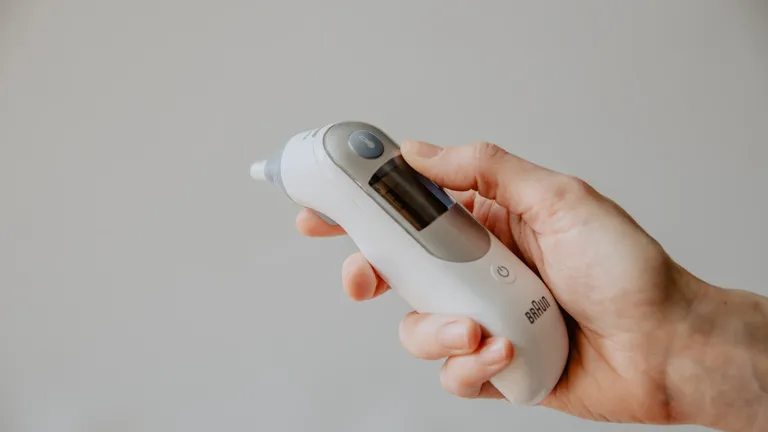
Braun ThermoScan 7 Ear Thermometer
Fast 2-second ear readings with Age Precision and a colour-coded display that is easy to interpret — far less of a struggle with restless children.
Best budget ear
Braun ThermoScan 3 Ear Thermometer
The reliability of Braun's infrared ear technology with a 1-second reading and audio fever indicator, at a lower price than the ThermoScan 7.
Best forehead
Braun No Touch + Forehead Thermometer
Dual no-contact or forehead-touch modes with positioning guidance and Age Precision — and no probe covers to replace.
Best non-contact
Vicks Non-Contact Infrared Thermometer
A well-priced, fully non-contact option with a colour-changing Fever InSight display and a surface-temperature mode for bottles and bath water.
Best digital stick
Braun Digital Thermometer
A no-fuss flexible-tip stick for accurate oral or underarm readings, with a fever beep and a waterproof design that is easy to clean.
Best value
Omron MC-246 Digital Thermometer
Accurate temperature measurement from a trusted medical-device brand with no learning curve — the lowest-priced pick in our lineup.
General information only — check with your pharmacist or GP before starting a new medicine. Always read the label and follow the directions for use.
We may earn a commission from these links. It never affects our rankings.
A reliable thermometer is one of the most important items in any home first aid kit. Choosing the best thermometer in Australia comes down to who you are measuring and how fast you need a reading. Whether you are monitoring a sick child overnight or checking your own temperature before calling in to work, an accurate reading helps you decide what to do next — rest at home, take paracetamol, or seek medical attention.
The awkward bit is choosing one before you urgently need it. There is a big jump in price between a basic digital thermometer and a premium ear or infrared model, and the marketing does not always make it obvious what you are paying for. We compared the common home options by accuracy, speed, ease of use, and everyday practicality.
Most Accurate Thermometers: The Quick Answer For home use, digital oral thermometers and ear (tympanic) thermometers are the most accurate options available in Australia. Ear thermometers like the Braun ThermoScan 7+ deliver a reading in under 3 seconds and closely reflect core body temperature. Forehead and non-contact infrared thermometers are faster but can vary with sweat or ambient temperature.
The Bottom Line For most families, a quality ear thermometer like the Braun ThermoScan 7 (and the newer ThermoScan 7+) offers the best combination of speed, accuracy, and ease of use — particularly with young children. If you are on a budget, a simple digital stick thermometer does the job reliably for adults and older children.
How We Assessed
- Accuracy: Compared against clinical-grade standards. Ear and oral thermometers are generally the most accurate for home use.
- Speed: How quickly the device delivers a reading — from under 1 second (infrared) to 60 seconds (digital stick).
- Ease of use: How straightforward the device is to use on yourself, a wriggling toddler, or an elderly family member.
- Suitability: Age appropriateness — some methods are unsuitable for babies under 6 months or small children.
- Value for money: Upfront cost, ongoing costs (probe covers, batteries), and expected lifespan.
- Availability: Widely stocked at major Australian pharmacies and retailers.
Types of Thermometers Available in Australia
Mercury thermometers have been phased out for safety reasons. Modern home thermometers fall into four main categories, each with different strengths and trade-offs.
Digital Oral/Underarm Thermometers
The classic stick-style thermometer with a metal tip and digital display. Place it under your tongue (oral) or in the armpit (axillary) and wait for the beep — usually 30 to 60 seconds. These are the most affordable option and provide reliable readings when used correctly. They are best suited to adults and children old enough to hold the thermometer still under their tongue.
Ear Thermometers (Tympanic)
Ear thermometers use an infrared sensor to measure heat emitted by the eardrum (tympanic membrane), which closely reflects core body temperature. They deliver a reading in 1 to 3 seconds, making them excellent for children who will not sit still. Most models require disposable probe covers, which add a small ongoing cost. Not recommended for babies under 6 months, as their ear canals are too narrow for accurate readings.
Forehead Thermometers (Temporal Artery)
These infrared devices scan across the forehead or temple area. Some require skin contact; others work from a few centimetres away. They are fast (1 to 2 seconds) and non-invasive, which makes them convenient for sleeping babies. However, external factors like sweating, ambient temperature, and technique can affect accuracy more than with ear or oral methods.
Non-Contact Infrared Thermometers
Popularised during COVID-19 for screening purposes, these devices measure forehead temperature from several centimetres away. They are the most hygienic option as nothing touches the skin, and many can also measure surface temperatures of objects like baby bottles. The trade-off is that they tend to be the least accurate of the four types for clinical-grade body temperature measurement.
Thermometer Types Compared
| Type | Accuracy | Speed | Price Range | Best For |
|---|---|---|---|---|
Digital oral/underarm | High (oral); moderate (underarm) | 30–60 seconds | $10–$30 | Adults, older children, budget buyers |
Ear (tympanic) | High | 1–3 seconds | $40–$120 | Families with children over 6 months |
Forehead (temporal) | Moderate to high | 1–2 seconds | $30–$80 | Sleeping babies, quick checks |
Non-contact infrared | Moderate | Under 1 second | $40–$100 | Screening, hygiene-sensitive settings |
Accuracy by Method: What to Expect
Accuracy depends as much on the measurement method as on the brand. As a general guide based on the published specifications of consumer medical devices: a good digital probe thermometer is typically accurate to within about 0.1°C, ear (tympanic) thermometers are similarly close to core body temperature when positioned correctly, and forehead or non-contact infrared thermometers show more variance — readings can drift if the skin is sweaty, if the person has just come in from the cold or sun, or if the ambient room temperature is unusually warm or cool. This is why oral and ear methods are generally preferred when precision matters, and why a borderline forehead reading is worth confirming with one of those methods.
Our Top Picks: The Best Thermometer Australia Has to Offer
Best Overall: Braun ThermoScan 7 Ear Thermometer
The Braun ThermoScan 7 is the easiest premium thermometer to recommend for family use. It is quick, easier to interpret than a plain number-only display, and far less of a struggle with kids than a stick thermometer under the tongue or arm. The Age Precision feature is genuinely helpful, especially when you are half-awake and just want to know whether the reading is reassuring or not. Braun has since released an updated model, the ThermoScan 7+, which carries the same core infrared technology and Age Precision display — if you are buying new, it is worth checking whether the 7+ is available and similarly priced.
Braun ThermoScan 7 Ear Thermometer
Professional-grade ear thermometer with Age Precision technology. The #1 brand used by doctors.
Where to buy · Braun ThermoScan 7 Ear Thermometer
Amazon AustraliaView
We may earn a commission from these links. It never affects our rankings.
Age Precision adjusts fever thresholds for different age groups
Colour-coded display (green/yellow/red) for instant interpretation
Pre-warmed tip for consistent accuracy
Fast 2-second reading — ideal for restless children
Memory stores last 9 readings to track trends
Requires disposable probe covers (ongoing cost of ~$8–$12 per 40 covers)
Higher upfront cost than basic thermometers
Not suitable for babies under 6 months (ear canal too small)
Best Budget Ear Thermometer: Braun ThermoScan 3
If you want the reliability of an ear thermometer at a lower price, the Braun ThermoScan 3 is a solid entry-level option. It delivers a 1-second reading and has an audio fever indicator that beeps differently depending on the temperature range. It lacks the colour-coded Age Precision display of the ThermoScan 7, but the core infrared measurement technology is the same.
Braun ThermoScan 3 Ear Thermometer
Compact ear thermometer with audio fever indicator. Provides accurate readings in just 1 second. Great value entry-level Braun ear thermometer.
Where to buy · Braun ThermoScan 3 Ear Thermometer
Amazon AustraliaView
We may earn a commission from these links. It never affects our rankings.
Accurate ear readings using Braun's infrared technology
Fast 1-second measurement
Audio fever indicator beeps to signal elevated temperature
More affordable than premium Braun models
No colour-coded display or Age Precision feature
Still requires disposable probe covers
No backlit screen — harder to read in a dark room
Best Forehead Thermometer: Braun No Touch + Forehead
The Braun No Touch works in two modes: hold it up to 5cm from the forehead for a no-contact reading, or touch it gently to the forehead for a contact reading (which tends to be slightly more accurate). The guidance system uses lights to help you position it at the correct distance. It also features Age Precision and a colour-coded fever display, similar to the ThermoScan 7.
Braun No Touch Forehead Thermometer
Dual mode thermometer - works as both no-touch and forehead thermometer. Clinically accurate.
Where to buy · Braun No Touch Forehead Thermometer
Amazon AustraliaView
We may earn a commission from these links. It never affects our rankings.
Dual mode — no-contact or forehead touch
Positioning guidance system for correct distance
Age Precision with colour-coded fever display
Can take temperature of sleeping babies without waking them
No probe covers needed — nothing to replace
Forehead readings can be affected by sweat or ambient temperature
Slightly less accurate than ear thermometers in clinical studies
Premium price point
Best Non-Contact: Vicks Non-Contact Infrared Thermometer
The Vicks Non-Contact Infrared Thermometer is a straightforward, well-priced option for non-contact temperature checks. Its Fever InSight feature uses a colour-changing display (green, yellow, red) so you can instantly understand the reading. It works from about 3 to 5 centimetres from the forehead and also measures surface temperatures — handy for checking bath water or baby bottles.
Vicks Non-Contact Infrared Thermometer
Non-contact infrared thermometer with colour-coded fever guidance for quick forehead readings and surface temperature checks.
Where to buy · Vicks Non-Contact Infrared Thermometer
Amazon AustraliaView
We may earn a commission from these links. It never affects our rankings.
Colour-coded Fever InSight display for easy interpretation
Fully non-contact — hygienic and suitable for sleeping children
Can measure surface temperatures (bath water, bottles)
Large, backlit display easy to read in low light
Non-contact readings can vary depending on distance and technique
Less accurate than ear or oral methods for precise measurement
Requires consistent positioning for reliable results
Best Digital Stick: Braun Digital Thermometer
The Braun Digital Thermometer is a reliable, no-fuss option for oral or underarm use. It features a flexible tip for comfort, a fever beep alert, and a waterproof design that makes it easy to clean. Most readings are ready within 60 seconds. For adults and older children who can hold a thermometer still under their tongue, a quality digital stick like this is all you need.
Braun Digital Thermometer
Fast, accurate digital thermometer with flexible tip. Waterproof and easy to clean.
Where to buy · Braun Digital Thermometer
Amazon AustraliaView
We may earn a commission from these links. It never affects our rankings.
Very affordable — under $20
Accurate oral readings when used correctly
Flexible tip for comfort
Waterproof and easy to clean
Long battery life
Takes 30–60 seconds per reading (slower than infrared)
Needs skin contact — less suitable for very young children
Underarm readings are less accurate than oral
Best Value: Omron MC-246 Digital Thermometer
The Omron MC-246 is a budget-friendly digital thermometer from a trusted medical device brand. It offers a flexible tip, fever alarm beep, and a clear digital display. It does what a basic thermometer needs to do — measure temperature accurately — without any bells and whistles. If you just need a reliable thermometer in the medicine cabinet, this is the one.
Omron MC-246 Digital Thermometer
Reliable digital thermometer with flexible tip and fever alarm. Quick 60-second reading. Waterproof for easy cleaning.
Where to buy · Omron MC-246 Digital Thermometer
Amazon AustraliaView
We may earn a commission from these links. It never affects our rankings.
Excellent value — typically under $15
Omron is a well-known, trusted medical device brand
Flexible tip and fever alarm
Simple to use — no learning curve
Basic display with no backlight
No memory or trend tracking features
Slower than infrared options (approximately 60 seconds)
Also Worth Considering: Beurer FT65 (3-in-1)
If you want one device that covers multiple methods, the Beurer FT65 is a 3-in-1 thermometer that can take forehead, ear, and surface (object) temperatures. A multi-mode device can be convenient for households measuring people of different ages, though combination units involve some trade-offs in simplicity. As with any infrared thermometer, follow the instructions carefully for each mode to get a reliable reading.
Where to Buy a Thermometer in Australia
Thermometers are widely available across Australia. Pharmacies such as Chemist Warehouse, Priceline Pharmacy, Amcal, and Terry White Chemmart stock the full range — from basic digital sticks to premium Braun ear and forehead models — and pharmacy staff can help you match a device to your family's needs. Major supermarkets including Woolworths and Coles carry basic digital and some infrared thermometers, and online retailers offer the widest selection. Prices vary between retailers and over time, so it is worth comparing before you buy. Whichever retailer you choose, look for established medical device brands with an Australian warranty.
How to Take Temperature Correctly
Even the best thermometer will give unreliable results if you use it incorrectly. Here is how to get the most accurate reading from each method.
Oral (Under the Tongue)
- Wait at least 15 minutes after eating, drinking, or exercising.
- Place the tip under the tongue, towards the back, and close your mouth.
- Breathe through your nose and keep still until the thermometer beeps.
- Normal oral temperature is around 36.8 degrees Celsius, but anywhere from 36.2 to 37.2 degrees is considered normal.
Ear (Tympanic)
- Use a clean probe cover for each reading.
- For adults and children over 1 year: gently pull the ear up and back to straighten the ear canal.
- For children under 1 year: gently pull the ear straight back.
- Insert the probe snugly into the ear canal and press the button.
- Wait for the beep. Do not move the thermometer during measurement.
- Avoid using immediately after the person has been lying on that ear — wait 5 minutes.
Forehead / Non-Contact
- Ensure the forehead is dry — wipe away sweat before measuring.
- Hold the thermometer at the distance specified in the instructions (usually 3 to 5cm).
- Keep the person out of direct sunlight or away from heaters before measuring.
- For contact forehead thermometers, swipe smoothly across the forehead from the centre to the temple.
- Indoor temperature extremes can affect readings — let the person acclimatise for a few minutes if they have just come inside.
Underarm (Axillary)
- Place the tip in the centre of the armpit, with the arm pressed firmly against the body.
- Hold for the full measurement time (often 3 to 5 minutes for underarm).
- Underarm readings tend to be 0.5 to 1.0 degrees lower than oral readings.
- This method is the least accurate but can be useful for very young children or people who cannot use oral or ear methods.
Consistency Matters Whatever method you choose, stick with it. Comparing an oral reading from this morning with a forehead reading tonight will not give you a reliable picture. Use the same thermometer, the same method, and ideally the same time of day when tracking a fever.
What Temperature Is a Fever? Ranges Explained
Fever Thresholds at a Glance In Australia, a temperature of 38.0°C or above is generally considered a fever in children. For adults, 37.3°C and above indicates an elevated temperature, with 38.1°C and above classified as a moderate fever. Always consult Healthdirect (1800 022 222) or your GP if you are concerned.
Normal body temperature varies between individuals and throughout the day — it is typically lowest in the early morning and highest in the late afternoon. The following ranges are general guides based on oral measurement. Ear readings are similar to oral; underarm readings tend to be about 0.5 degrees lower.
Adults
| Reading | What It Means |
|---|---|
| 36.2–37.2°C | Normal range |
| 37.3–38.0°C | Low-grade fever (elevated temperature) |
| 38.1–39.0°C | Moderate fever |
| 39.1°C and above | High fever — seek medical advice |
Children
| Reading | What It Means |
|---|---|
| 36.5–37.5°C | Normal range |
| 37.6–38.0°C | Mildly elevated — monitor and keep child comfortable |
| 38.1–38.5°C | Moderate fever — consider paracetamol or ibuprofen if child is uncomfortable |
| 38.5°C and above | High fever — see your GP or call healthdirect on 1800 022 222 |
Newborns and Babies Under 3 Months
Temperature measurement in very young babies needs extra care. For newborns and babies under 3 months, a digital underarm (axillary) reading is the preferred home method — ear thermometers are not suitable because the ear canal is too narrow, and underarm measurement is gentle and avoids the variability of forehead readings. Most importantly, the threshold for action is much lower in this age group, so any reading at or above 38.0°C should be treated as urgent.
Babies Under 3 Months Any temperature of 38.0 degrees Celsius or above in a baby under 3 months is a medical emergency. Take your baby to the nearest emergency department immediately, even if they appear otherwise well.
When to See a Doctor with a Fever
Most fevers in otherwise healthy adults and older children resolve on their own within a few days. However, you should seek medical attention in the following situations:
- Any fever in a baby under 3 months old — go to the emergency department immediately.
- Fever above 38.0 degrees Celsius in a baby aged 3 to 6 months — see a doctor the same day.
- Fever above 39.0 degrees Celsius in adults that does not respond to paracetamol or ibuprofen.
- Fever lasting more than 3 days in adults or more than 24 hours in children under 2 years.
- Fever accompanied by a stiff neck, severe headache, rash, difficulty breathing, persistent vomiting, or confusion.
- Fever in anyone with a weakened immune system, chronic illness, or who is undergoing cancer treatment.
- Febrile seizures (fits associated with fever) in children — call 000 if the seizure lasts more than 5 minutes.
Healthdirect Helpline If you are unsure whether a fever needs medical attention, call healthdirect on 1800 022 222 for free health advice from a registered nurse, 24 hours a day, 7 days a week.
What to Look For When Buying a Thermometer
- Match the type to the user: Ear and forehead thermometers are best for young children. Digital stick thermometers are fine for adults.
- Age Precision or fever indicators: Colour-coded displays (green/yellow/red) save you from Googling fever ranges at 3am. Worth the premium if you have young children.
- Backlit display: Essential if you are checking a child's temperature in a dark bedroom overnight.
- Memory function: Useful for tracking whether a fever is rising or falling over several hours.
- Ongoing costs: Ear thermometers require disposable probe covers ($8 to $12 per 40). Digital and forehead thermometers generally have no ongoing costs beyond battery replacement.
- Speed: If you are measuring a squirming toddler, a 1-second ear reading beats a 60-second oral reading every time.
- Brand reputation: Stick to established medical device brands like Braun, Omron, and Vicks. Avoid unbranded imports with no TGA listing or Australian warranty.
Frequently Asked Questions
What is the most accurate thermometer for adults in Australia?
For adults, a digital oral (under-the-tongue) thermometer used correctly is generally regarded as the most accurate option for home use, closely followed by a well-positioned ear (tympanic) thermometer. Both are widely available in Australia. The key is good technique: wait at least 15 minutes after eating, drinking, or exercising before an oral reading, and use a clean probe cover for ear readings.
What is the most accurate thermometer for home use?
For home use, digital oral thermometers and ear (tympanic) thermometers are generally the most accurate. Oral thermometers are considered the gold standard for adults when used correctly. Ear thermometers are extremely accurate when positioned properly and are more practical for children. Forehead and non-contact thermometers trade a small amount of accuracy for convenience.
Which thermometer has the highest accuracy?
Digital probe (oral) and ear (tympanic) thermometers offer the highest accuracy among consumer devices, with good models typically accurate to within about 0.1°C. Forehead and non-contact infrared thermometers are convenient and fast, but their readings are more sensitive to sweat, ambient temperature, and technique, so they tend to be slightly less precise for borderline measurements.
What thermometer do doctors and hospitals use?
Healthcare settings commonly use professional-grade digital probe (oral) thermometers and tympanic (ear) thermometers, often with single-use probe covers for hygiene. These are the same measurement methods available in consumer devices — the clinical versions are simply built for high-volume, repeated use. For accurate measurement at home, a quality oral or ear thermometer uses the same underlying technology.
Are non-contact thermometers accurate enough?
Non-contact infrared thermometers are useful for quick screening and checking sleeping children, but they can be affected by ambient temperature, sweating, and distance. They are accurate enough to detect a significant fever but may not give precise readings for borderline temperatures. If a non-contact reading seems elevated, confirm with an oral or ear thermometer.
Can I use an ear thermometer on a newborn?
No — ear thermometers are not recommended for newborns or babies under 6 months because their ear canals are too narrow to get an accurate reading. For babies in this age group, a digital underarm (axillary) measurement is the preferred home method. For any fever in a baby under 3 months, seek immediate medical attention regardless of the method used.
What temperature is a fever in children?
In Australia, a temperature of 38.0°C or above is generally considered a fever in children. A reading between about 37.6°C and 38.0°C is mildly elevated and usually only needs monitoring and keeping your child comfortable. If your child has a high fever, seems unwell, or is under 3 months old, contact your GP or call Healthdirect on 1800 022 222.
What is the best forehead thermometer in Australia?
A good forehead (temporal) thermometer balances convenience with reasonable accuracy. Dual-mode options that allow either a no-contact scan or a light forehead touch — such as the Braun No Touch + Forehead — tend to perform well, and models with positioning guidance and a colour-coded fever display are easier to use correctly. Remember that forehead readings are more affected by sweat and ambient temperature than ear or oral methods, so confirm a borderline reading with an oral or ear thermometer.
Why do I get different readings from different thermometers?
Different measurement sites have different normal ranges. Oral and ear readings are generally similar. Underarm readings tend to be 0.5 to 1.0 degrees Celsius lower, while forehead readings can vary depending on technique and environmental factors. This is normal — the key is to use the same method consistently and know the normal range for that method.
How often should I replace my thermometer?
Most digital thermometers last 3 to 5 years with normal use. Replace your thermometer if the display fades, if it gives clearly inaccurate readings (for example, if your known-well temperature reads significantly outside normal range), or if the battery compartment corrodes. Store it in a clean, dry place between uses.
Do I need to calibrate my home thermometer?
Consumer-grade thermometers do not typically require calibration. However, you can check accuracy by taking three readings in a row — they should be within 0.2 degrees of each other. If results vary wildly, the thermometer may be faulty. Some pharmacies offer accuracy checks if you bring your thermometer in.
Disclaimer This article is for informational purposes only and does not constitute medical advice. Always read the label and follow the directions for use. If symptoms persist, talk to your health professional. See your pharmacist or GP for advice tailored to your situation.
Related health topics
Medical disclaimer
This information is general in nature and isn’t a substitute for professional medical advice. Always read the label and follow the directions for use. Talk to your pharmacist or doctor about what’s right for you.
More Skin, wound & sun care guides
Skin, wound & sun care15 min read
First Aid Kit Essentials for Australia (2026 Guide)
Everything your Australian home, car, or outdoor kit needs — from St John and Trafalgar picks to AU-specific extras like compression bandages and burn gel.
Cough, cold & flu13 min read
Cold vs Flu in Australia: Symptoms & Treatment (2026)
Flu hits hard and fast; a cold creeps in slowly. Learn the key symptom differences, how long each lasts, and the best OTC options in Australian pharmacies.
Pain relief11 min read
Best Paracetamol Australia: Panadol vs Panamax (2026)
Panadol, Panamax, Herron, Chemist Own — same active ingredient, very different prices. We compare every formulation and show where to find the best value in Australia.